Why Plant-Based Iron Needs a Completely Different Timing Strategy
Quick Answer: Plant iron is non-heme iron, and its absorption ranges from roughly 2% to 20% depending on what it is eaten with. Vitamin C can multiply absorption several times over; tea, coffee, and calcium can cut it substantially. Separating those by an hour or two matters more than eating more iron overall.
Your intake looks fine on paper. Lentils, spinach, fortified cereal, tofu. And your labs came back low anyway, or you are tired in a way that sleep does not fix. The number on the tracking app is not the number your body received.
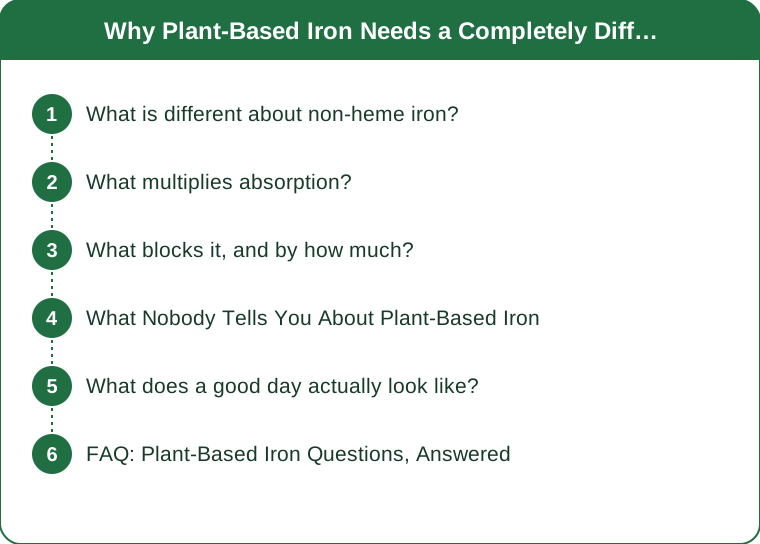
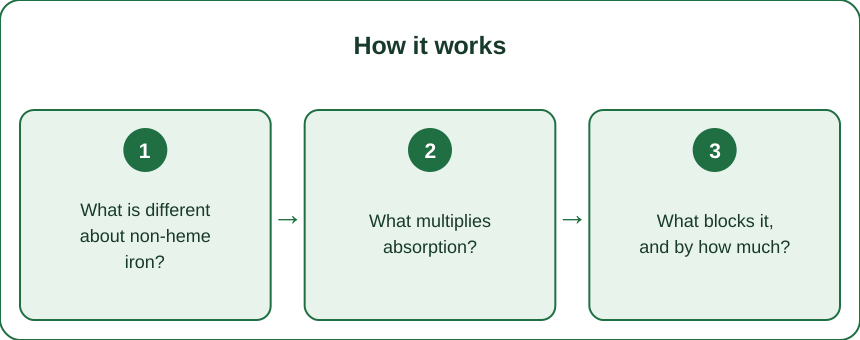
What is different about non-heme iron?
Animal foods contain heme iron, which comes packaged inside a molecule that your gut absorbs through a dedicated pathway. Absorption is relatively high and relatively fixed — around 15 to 35% — and not much interferes with it.
Plant foods contain non-heme iron, which has to be released, reduced from ferric to ferrous form, and then transported. Every step in that chain can be helped or blocked by other things in the same meal.
The absorption range for non-heme iron is roughly 2% to 20%, a tenfold swing. Which end of that range you land on is determined almost entirely by meal composition.
This is why the recommended intake for people eating fully plant-based diets is often set considerably higher than the general recommendation. You are not being told to eat more iron because plants have less. You are being told to eat more because you absorb less of it.
What multiplies absorption?
Two things do most of the work.
Vitamin C is the big one. Ascorbic acid reduces ferric iron to the absorbable ferrous form and binds it in a way that protects it from inhibitors. Adding a meaningful vitamin C source to an iron-containing meal can multiply absorption several times over.
Practical pairings that require no effort:
- Lentils with tomato
- Spinach with lemon or a citrus dressing
- Fortified cereal with strawberries or orange juice
- Beans with bell pepper or salsa
- Tofu with broccoli
Acid in general helps. A splash of vinegar, lemon, or a fermented component lowers gastric pH and improves release.
The key detail is that vitamin C must be in the same meal, not taken separately later. It works by chemistry in the stomach, not by any longer-term mechanism.
What blocks it, and by how much?
Four common inhibitors, all easy to work around once you know them.
- Tannins in tea and coffee. A cup with a meal can substantially reduce non-heme iron absorption. Black tea is the strongest inhibitor; coffee is close behind; herbal teas vary.
- Calcium, which competes with iron for the same transport pathway. This is the only inhibitor that affects heme iron too. A large dairy or fortified plant milk serving alongside an iron meal reduces uptake.
- Phytates, found in whole grains, legumes, nuts, and seeds — which is inconvenient, because those are also the main plant iron sources. Soaking, sprouting, fermenting, and long cooking all reduce phytate content meaningfully.
- Polyphenols in some vegetables, cocoa, and red wine.
The practical rule: keep tea, coffee, and large calcium servings at least one hour away from your iron-rich meals. That single habit is often worth more than any supplement.
What Nobody Tells You About Plant-Based Iron
Several things that rarely make it into the general advice.
Spinach is a poor iron source despite the reputation. It contains oxalates that bind iron tightly, so the absorbed amount is low. Lentils, tofu, pumpkin seeds, and fortified foods are far more useful.
Cooking in cast iron genuinely adds iron to food, especially with acidic ingredients like tomato sauce. It is a small effect per meal that adds up over months.
Your body adapts. Long-term plant-based eaters upregulate absorption over months, so an eight-week test of a new diet may not reflect where you settle.
Low ferritin can precede low hemoglobin by a long time. You can have depleted stores, and feel it, while your hemoglobin still reads normal. If you are being tested, ferritin is the more sensitive early marker — worth asking about specifically.
Heavy training raises requirements, through foot-strike hemolysis in runners, sweat losses, and inflammation-driven absorption suppression.
What does a good day actually look like?
A structure rather than a recipe:
- Morning: fortified cereal or oats with berries or a small glass of orange juice. Save the coffee for an hour later, which is the single highest-impact change most people can make.
- Midday: lentil or bean-based meal with a tomato, pepper, or citrus component.
- Afternoon: if you drink tea, this is the slot — between meals rather than with them.
- Evening: tofu or tempeh with a vitamin C vegetable. Keep the large calcium-fortified drink for a different time of day.
- Preparation habits: soak legumes before cooking, choose sprouted or fermented grain products where convenient, and use cast iron for acidic dishes.
If you are fatigued, breathless on stairs, or unusually cold, ask for a full iron panel including ferritin rather than self-supplementing. Iron supplements can cause harm when taken without a demonstrated need, and some people have conditions where extra iron is actively dangerous. This is general information, not medical advice.
FAQ: Plant-Based Iron Questions, Answered
How much more iron do plant-based eaters need?
Recommendations commonly set the requirement substantially higher than for people eating meat — often cited as roughly 1.8 times. The exact figure matters less than the meal-composition habits, which affect absorption more than intake does.
Should I take a supplement just in case?
No. Iron is one of the nutrients where more is not safer, and excess accumulates. Test first, supplement based on results, and retest.
Does the timing rule apply to supplements too?
Yes, and more strictly. Iron supplements are typically best absorbed away from food, with a vitamin C source, and well away from calcium, tea, and coffee. Follow whatever protocol your clinician gives you.
TL;DR:
- Non-heme iron absorption swings from about 2% to 20% based on what else is in the meal
- Vitamin C in the same meal is the strongest enhancer; tea, coffee, and calcium are the strongest blockers
- Keep tea and coffee an hour away from iron meals — often the single highest-value change
- Soak, sprout, and ferment to cut phytates, and test ferritin rather than guessing
The encouraging part is that none of this requires eating differently, only sequencing differently. Move your coffee an hour later, put something citrus on your lentils, and you have likely done more for your iron status than a month of eating additional beans would have.
Keep Reading
This article is for general informational purposes only and is not medical advice. Always consult a qualified health professional for guidance specific to you.