Why Iron From Plants Needs a Completely Different Strategy
Quick Answer: Plant foods contain non-heme iron, which is absorbed very differently from the heme iron in meat. Absorption of non-heme iron is highly variable — commonly cited as roughly 2 to 20 percent depending on what else is in the meal, whereas heme iron absorbs at a steadier and higher rate. This is why recommended intakes for people eating no meat are often set considerably higher. The strategy is not eating more iron — it is pairing it with vitamin C, separating it from tea, coffee and calcium, and preparing the food in ways that release it.
The quantity on the label is not the quantity you absorb.
And the gap between the two is enormous, which is also the opportunity.
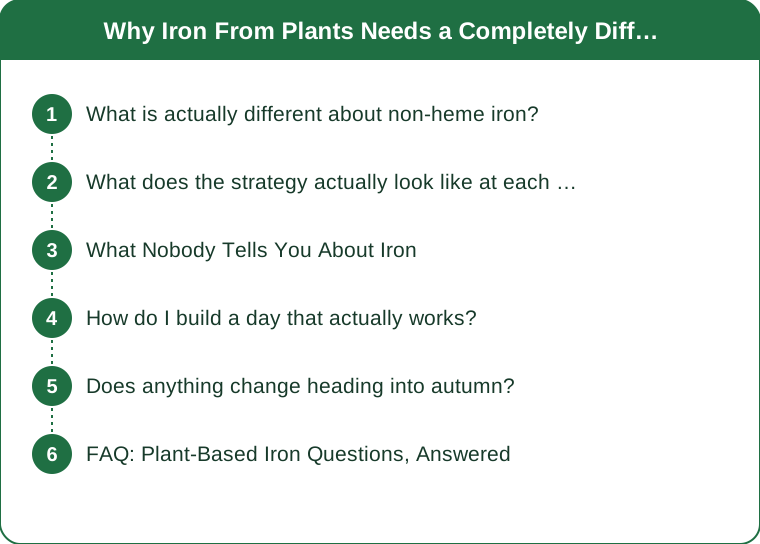
What is actually different about non-heme iron?
The chemistry, and it has large practical consequences.
Heme iron — from meat, poultry and fish — is bound within a protein structure that the gut absorbs through a dedicated pathway. It is relatively protected from other components of the meal and absorbs at a fairly consistent rate.
Non-heme iron — from plants, and also from eggs, dairy and fortified foods — is absorbed through a different mechanism that is highly sensitive to the chemical environment of the meal. It must be in the right chemical form to be taken up, and various compounds either help or block that conversion.
The practical result: the same bowl of lentils can deliver several times more absorbed iron or several times less, depending entirely on what you drink with it.
The main enhancers:
Vitamin C is the strongest, and the effect is large. It converts iron into the more absorbable form and it also counteracts some inhibitors. Adding a good vitamin C source to an iron-containing meal can substantially increase absorption — the effect is one of the more robust findings in nutrition.
Other organic acids — citric, malic and lactic acid — help as well, which is part of why fermented foods and citrus work.
The main inhibitors:
Phytates, found in whole grains, legumes, nuts and seeds. These are the biggest single inhibitor in a plant-based diet, and awkwardly they are present in the very foods that contain the iron.
Polyphenols in tea, coffee, cocoa and red wine. Tea is a particularly strong inhibitor, and a cup with a meal can reduce iron absorption dramatically.
Calcium, which competes with iron for absorption. This affects dairy, fortified plant milks and calcium supplements.
Does this mean plant-based diets are inadequate for iron?
No. It means the strategy has to be different. Iron deficiency is common across many populations regardless of diet, and a well-constructed plant-based diet manages it perfectly well.
What does the strategy actually look like at each meal?
Concrete, meal by meal, because the general advice is hard to apply.
Pair every iron source with vitamin C. This is the single highest-impact habit, and it is easy:
- Lentils or beans with tomatoes, peppers, or a squeeze of lemon.
- Fortified cereal with strawberries, kiwi or orange segments — not with tea.
- Tofu stir-fried with broccoli, peppers or cabbage.
- Spinach with citrus dressing rather than plain.
- Porridge with berries.
Move tea and coffee away from meals. The effect here is substantial and it is the most commonly overlooked. Aim for at least an hour either side of an iron-containing meal. For someone who drinks tea with every meal, this single change can matter more than anything they add.
Separate calcium supplements and large dairy servings from your main iron meals. Fortified plant milk in a bowl of fortified cereal is a genuinely counterproductive combination.
Reduce phytates through preparation, which is traditional food practice and it works:
- Soaking legumes and grains overnight, then discarding the water.
- Sprouting, which reduces phytate content further.
- Fermenting — sourdough bread has significantly lower phytate than standard bread, which is one of its real nutritional advantages.
- Cooking thoroughly, which helps somewhat.
Use a cast iron pan, particularly for acidic foods like tomato sauces. Small amounts of iron transfer into the food, and the effect is measurable.
And a note on spinach specifically: it is high in iron and also high in oxalates, which bind iron and reduce its availability. Spinach is a much weaker iron source in practice than its reputation suggests. Lentils, tofu, pumpkin seeds, fortified foods and beans are all better bets.
What Nobody Tells You About Iron
Your body regulates absorption based on your stores. When iron levels are low, absorption increases substantially. When they are adequate, it decreases. This is why supplementing without knowing your levels is a poor idea, and why some people absorb far more from the same meal than others.
Symptoms are vague and easily attributed elsewhere. Fatigue, breathlessness on exertion, poor concentration, feeling cold, brittle nails, hair shedding. All of these get blamed on stress, sleep or a busy period. A blood test is the only way to know, and it is worth asking for rather than guessing.
Ferritin is the number to ask about, not just haemoglobin. Haemoglobin falls late, once stores are already depleted. Ferritin reflects stores and drops first, so a normal haemoglobin with low ferritin is a common and meaningful finding.
Do not self-supplement iron without testing. Excess iron is harmful, some people have conditions that cause iron overload, and iron supplements commonly cause constipation and stomach upset. This one genuinely warrants a doctor’s involvement.
Heavy menstrual bleeding is the most common cause of iron deficiency in menstruating people, and it is frequently normalised. If your periods are heavy, that is a more important variable than your diet.
Endurance exercise increases iron needs. Losses through sweat, through the gut, and through the mechanical destruction of red blood cells in the feet during running all add up. Runners on plant-based diets are a group worth paying particular attention here.
And the timing detail people miss: taking iron every other day may be absorbed better than daily dosing, because a large dose raises a hormone that then blocks absorption for a period. If you have been prescribed iron, this is worth discussing with your doctor.
This is general information, not medical advice. Ask your doctor before taking iron supplements and for testing if you have symptoms.
How do I build a day that actually works?
An example structure, showing the pattern rather than prescribing the food.
Breakfast: fortified porridge or cereal with berries or a chopped orange. No tea or coffee with it — move it to an hour later. This alone is a bigger change than most people expect.
Mid-morning: coffee or tea here, well away from the meal.
Lunch: lentil or bean-based, with tomatoes, peppers or a lemon dressing. Wholegrain bread ideally sourdough.
Afternoon: pumpkin seeds or a handful of nuts, with a piece of fruit.
Dinner: tofu, tempeh or beans, cooked in a cast iron pan where practical, with plenty of vegetables including a vitamin C source. Save dairy or fortified plant milk for a different time.
Evening: if you drink tea in the evening, that is the ideal time for it — well clear of the main iron-containing meals.
The three habits that carry most of the benefit:
- Vitamin C with every iron-containing meal.
- Tea and coffee an hour away from meals.
- Soaked, sprouted or fermented preparation for legumes and grains where you can.
How long before levels change?
Iron stores rebuild slowly — typically months rather than weeks, and longer if the intake gap is small. If you have been diagnosed as deficient, follow your doctor’s guidance rather than relying on diet alone.
Does anything change heading into autumn?
A few genuinely relevant things.
Hot drink consumption rises sharply. As the weather cools, tea and coffee intake goes up, and much of it happens with or immediately after meals. This is the most significant seasonal factor for iron absorption, and it is entirely invisible because nobody thinks of a cup of tea as a dietary change.
Seasonal produce shifts away from the highest vitamin C sources. Summer’s berries, tomatoes and peppers give way to root vegetables. The autumn and winter vitamin C sources worth knowing are brassicas — Brussels sprouts, kale, broccoli, cabbage — plus citrus, which comes into season, and peppers which remain available. Red cabbage and kale in particular are excellent and under-used.
Warm cooked meals dominate, which is fine and often helpful, since cooking legumes thoroughly improves availability. Adding lemon juice at the end of a soup or stew is the seasonal equivalent of a salad’s citrus dressing, and heat degrades vitamin C, so adding it after cooking matters.
Vitamin D falls, which is a separate issue and worth mentioning because it commonly affects the same people. Discuss supplementation with your doctor as the season changes.
And fatigue increases for many people in autumn for reasons of light and sleep — which means iron deficiency symptoms are easier to attribute to the season and miss entirely. If fatigue is new or significant, get tested rather than assuming it is the weather.
Worth doing over the next few weeks:
- Move your tea and coffee away from mealtimes, deliberately, as consumption rises.
- Add lemon or vinegar at the end of soups and stews.
- Lean on brassicas and citrus as your vitamin C sources.
- Ask about a blood test if fatigue is new, rather than waiting to see if it passes.
This is general information, not medical advice.
FAQ: Plant-Based Iron Questions, Answered
Is spinach a good iron source?
Less than its reputation. It contains iron and also oxalates that bind it. Lentils, tofu, pumpkin seeds, beans and fortified foods are more reliable.
How much more iron do I need on a plant-based diet?
Recommendations for people eating no meat are commonly set considerably higher than standard, reflecting lower absorption. Your doctor or a dietitian can advise on your specific case.
Does a cast iron pan really help?
Measurably, particularly with acidic foods cooked for a while. It is a small contribution rather than a solution.
Can I just take a supplement?
Not without testing. Excess iron is harmful, and supplements commonly cause digestive side effects. Ask your doctor.
Does decaf coffee still inhibit absorption?
Yes — the polyphenols rather than the caffeine are responsible, so decaf has a similar effect.
What about herbal teas?
Varies considerably by type. Some contain significant polyphenols and some do not. Peppermint and chamomile are generally considered lower-impact than black or green tea.
TL;DR:
- Plant iron is non-heme, absorbed at roughly 2 to 20 percent depending entirely on the rest of the meal.
- Vitamin C is the strongest enhancer — pair it with every iron-containing meal.
- Tea and coffee are strong inhibitors. Move them at least an hour from meals; this is often the single biggest change available.
- Calcium competes — separate fortified milk and supplements from iron meals.
- Soaking, sprouting and fermenting reduce phytates and improve availability.
- Spinach underperforms its reputation because of oxalates. Lentils, tofu, pumpkin seeds and fortified foods are better.
- Ask about ferritin, not just haemoglobin, and do not supplement without testing.
- Autumn raises tea consumption and shifts vitamin C sources to brassicas and citrus — add lemon after cooking, not during.
This is general information, not medical advice.
You were never eating too little iron. You were drinking tea with it.
Keep Reading
This article is for general informational purposes only and is not medical advice. Always consult a qualified health professional for guidance specific to you.