Why Omega-3 Is the Plant-Based Gap Nobody Plans For
Quick Answer: Plant foods supply ALA - the short-chain omega-3 - but the long-chain forms your brain and eyes actually use, EPA and DHA, must be converted from it, and that conversion is inefficient. Estimates commonly put ALA-to-EPA conversion in the single-digit percentages and ALA-to-DHA lower still, often under 1 percent. The practical response: eat ALA sources daily (ground flax, chia, walnuts, hemp), keep omega-6 intake moderate so it does not compete for the same enzymes, and consider an algae-derived EPA/DHA supplement.
Algae oil is worth knowing about specifically: it is the original source that fish get their omega-3 from.
This is general information, not medical advice.

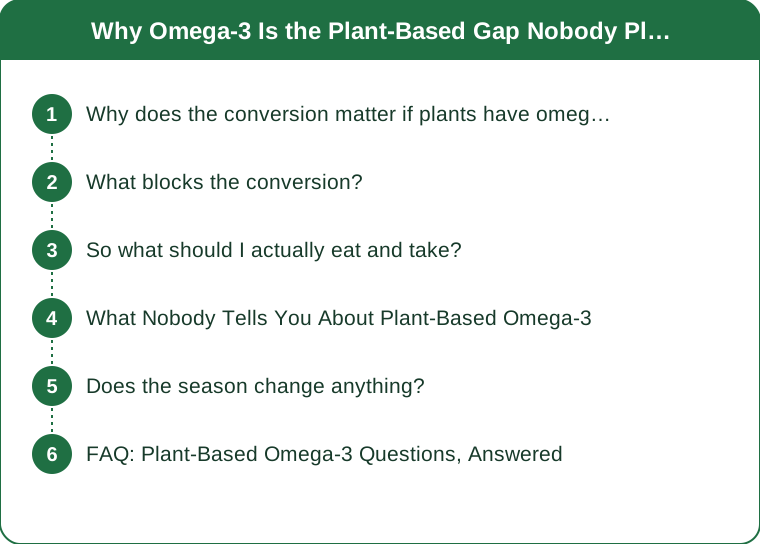
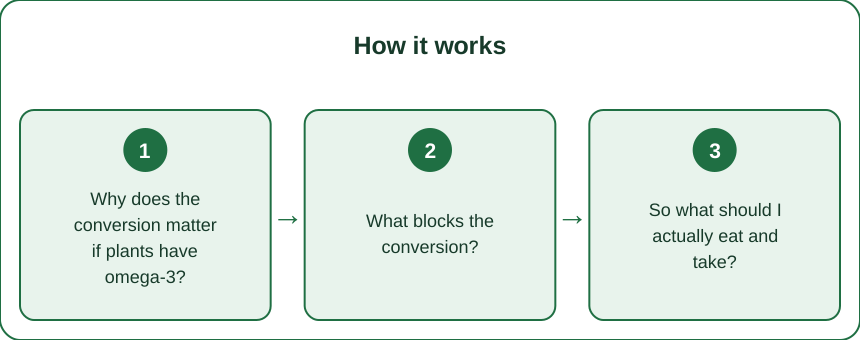
Why does the conversion matter if plants have omega-3?
Because omega-3 is a family, not a single nutrient, and the members do different jobs.
ALA (alpha-linolenic acid) is the plant form. Flax, chia, walnuts, and hemp are rich in it, and it is genuinely an essential fatty acid.
EPA and DHA are the long-chain forms. These are the ones with the strongest research behind them for cardiovascular and cognitive function, and DHA is a major structural component of the brain and retina.
Your body can convert ALA into EPA and DHA - but not efficiently. Reviews of the conversion pathway commonly report ALA to EPA in the range of a few percent, and ALA to DHA often below 1 percent.
So a food label showing omega-3 content is describing ALA, and the amount that reaches DHA is a small fraction of it.
Two additional wrinkles. Conversion appears to be somewhat more efficient in women than in men, likely an adaptation related to pregnancy demands - which is genuinely good news here. And conversion varies substantially between individuals based on genetics, so some people convert meaningfully better than others.
Which is why this is a gap that hides. Nothing about your diet looks deficient on paper.
What blocks the conversion?
Mostly one thing, and it is very common in modern diets.
Omega-6 and omega-3 compete for the same enzymes. The desaturase enzymes that convert ALA into EPA also convert linoleic acid - the main omega-6 - into its downstream products. A high omega-6 intake occupies the enzymes and further reduces an already-low conversion rate.
And plant-based diets are often high in omega-6, because the convenient staples are. Sunflower, corn, soybean, and safflower oils are all omega-6 dominant, and so are many nuts, seeds, and processed foods built around those oils.
The ratio is what matters, not the absolute amount. Typical Western diets are frequently estimated at something like 15:1 omega-6 to omega-3, against a more favorable target often cited around 4:1 or lower.
What to do about it, in order of impact:
Switch your default cooking oil. Olive oil is mostly monounsaturated and does not compete. This single swap moves the ratio more than adding flax does.
Reduce processed foods built on cheap seed oils.
Keep eating nuts and seeds - the whole foods bring enough benefit to be worth their omega-6, and this is not an argument for avoiding them.
Other things that impair conversion: alcohol, and inadequate zinc, magnesium, or B6, since the enzymes require those cofactors.
So what should I actually eat and take?
A daily ALA habit plus a decision about supplementing.
Daily ALA sources - one serving of any of these:
- Ground flaxseed, 1 tablespoon. The richest common source. It must be ground - whole flaxseeds pass through largely undigested. Grind it yourself or buy pre-ground and refrigerate it.
- Chia seeds, 1 tablespoon. No grinding required and they keep better.
- Walnuts, about a quarter cup. The only common tree nut that is a meaningful ALA source.
- Hemp seeds, 2-3 tablespoons. Also a decent protein source.
Store them cold. Omega-3 fats oxidize quickly - ground flax at room temperature degrades within weeks, and a rancid seed provides nothing useful.
Then the supplement question: algae oil. Algae is where marine EPA and DHA originate - fish accumulate it by eating algae. An algae-derived supplement provides EPA and DHA directly, skipping the conversion problem entirely.
Typical supplemental doses are in the range of 200-500 mg combined EPA and DHA per day for general purposes, though appropriate amounts depend on individual circumstances. Higher intakes can affect blood clotting, which matters for anyone on blood thinners or approaching surgery. Talk to your doctor - especially if pregnant or breastfeeding, when DHA needs are higher. This is general information, not medical advice.

What Nobody Tells You About Plant-Based Omega-3
Five things that change the picture.
A blood test exists and almost nobody uses it. The omega-3 index measures EPA and DHA in red blood cell membranes. It is available as a home test kit and it converts this whole topic from guesswork into a number. If you have been plant-based for years, it is worth knowing.
Flaxseed oil is not a replacement for algae oil. It is concentrated ALA, so it faces exactly the same conversion bottleneck. More ALA does not solve a conversion problem - it only pushes harder against the same limit.
Deficiency symptoms are vague and slow. Dry eyes, dry skin, low mood, and difficulty concentrating are all associated with low long-chain omega-3 status - and all have many other causes. There is no dramatic symptom to prompt you, which is precisely why this gap persists.
Levels build slowly. Red blood cell membranes turn over across months, so expect roughly three to four months before a change shows up in a test - and do not judge a change after two weeks.
The seed oil ratio matters more than most people’s supplement choice. Someone eating a lot of sunflower-oil-based processed food and taking algae oil is fighting themselves. Fix the oil first; it is free and it improves the conversion of everything you already eat.
Does the season change anything?
Two ways, and the fall shift is worth planning for.
Cooking oil use rises as the weather cools. Summer eating is more raw and cold; autumn brings roasting, sautéing, and baking. Whatever oil is in your kitchen in September gets used far more than it did in July - which makes the switch to olive oil more valuable now than at any other point in the year.
Storage gets easier, then harder. Cooler kitchens slow oxidation of ground flax and nuts. But the seasonal move to a warm, well-heated kitchen in late fall reverses it, and a bag of walnuts left in a cupboard above the stove goes rancid faster than most people realize. Refrigerate or freeze all nuts and seeds - it costs nothing and doubles their useful life.
Fall produce supports the ratio. Squash, root vegetables, and greens are whole foods that displace processed, oil-heavy options in the rotation. The seasonal shift toward cooked whole-food meals naturally improves the omega-6 balance.
And it is a sensible time to test. If you are going to check an omega-3 index, doing it before the winter, when mood and skin complaints tend to surface anyway, gives you a baseline to interpret them against rather than guessing later. This is general information, not medical advice.
FAQ: Plant-Based Omega-3 Questions, Answered
Is flaxseed enough on its own?
It supplies plenty of ALA, and whether that converts to sufficient DHA varies a lot between individuals. An omega-3 index test is the only way to know for your own body rather than for the average one.
Is algae oil as good as fish oil?
It provides the same EPA and DHA molecules, since algae is the original source in the marine food chain. It also avoids the contaminant and sustainability questions that come with fish oil.
Can I just eat more walnuts instead of supplementing?
More ALA runs into the same conversion ceiling. Walnuts are excellent food for many reasons - they are simply not a reliable route to DHA. Eat them, and make the supplement decision separately with your doctor.
TL;DR:
- Plant foods provide ALA; your body converts very little of it to EPA and even less to DHA.
- Omega-6 competes for the same enzymes - switching your default cooking oil to olive oil is the highest-impact free change.
- Eat a daily ALA source: ground flax, chia, walnuts, or hemp - and keep them refrigerated.
- Algae oil supplies EPA and DHA directly, skipping the conversion bottleneck; discuss dosing with your doctor.
- An omega-3 index test turns guesswork into a number, and levels take three to four months to shift.
Check which oil is on your counter first. That one is free, takes ten seconds, and improves everything else you are already doing. This is general information, not medical advice.
Keep Reading
This article is for general informational purposes only and is not medical advice. Always consult a qualified health professional for guidance specific to you.