Zinc and Iodine: The Two Plant-Based Gaps Nobody Checks
Quick Answer: Plant zinc is bound by phytates and absorbed substantially less efficiently than animal-source zinc, so requirements are often estimated higher for plant-based eaters. Iodine is nearly absent from most plant foods and plant milks unless fortified, and plant-based diets that exclude dairy and seafood commonly fall short. Both are correctable with soaking and sprouting for zinc, and either iodized salt or a supplement for iodine.
You got the B12 sorted in week one and the iron by month two. These two never came up, and they are the ones that quietly explain the slow-healing cuts and the fatigue that iron testing did not account for.

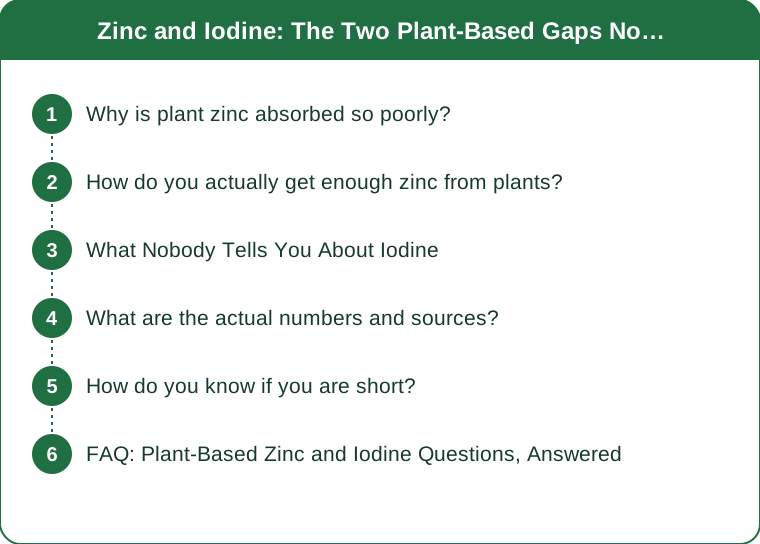
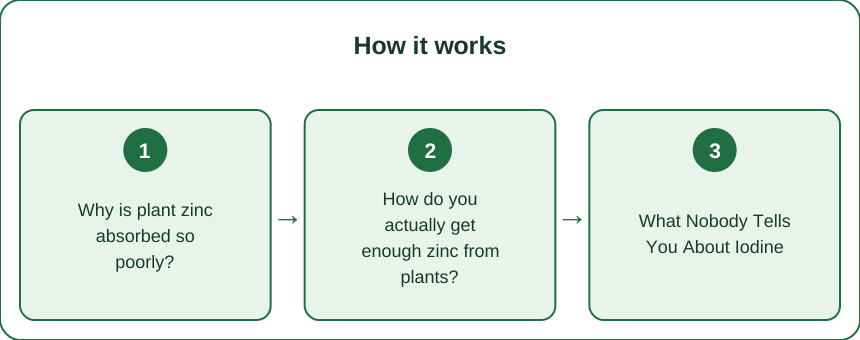
Why is plant zinc absorbed so poorly?
Phytate, which is present in the same foods that contain the zinc.
Phytic acid binds zinc in the digestive tract and forms complexes that humans cannot absorb. Legumes, whole grains, nuts, and seeds are the best plant sources of zinc, and they are also the highest in phytate. The nutrient and its inhibitor arrive together.
This is why some bodies, including the US Institute of Medicine, have noted that requirements may be roughly 50 percent higher for those consuming diets high in phytate. That adjustment is not widely communicated to people going plant-based.
Zinc deficiency is also hard to spot because there is no simple reliable blood test in wide use. Serum zinc responds poorly to intake and falls during inflammation, so a normal result does not rule much out.
Which leaves symptoms, and they are non-specific: slow wound healing, frequent minor infections, altered taste, hair thinning, and skin problems. Individually forgettable. Together, worth investigating.
How do you actually get enough zinc from plants?
Increase intake and reduce phytate, and the second one is where most of the leverage is.
Soaking. Soaking legumes and grains for 8-12 hours and discarding the water reduces phytate meaningfully. This is the single easiest change and most people already own the equipment, which is a bowl.
Sprouting. Activates phytase enzymes that break down phytate, and increases available zinc further than soaking alone.
Leavening. Yeast and sourdough fermentation degrade phytate substantially. Genuine sourdough bread delivers more available zinc than the same flour in a quick bread, which is a real and underappreciated difference.
Food pairing. Some organic acids from fruits and vegetables improve absorption, so eating zinc sources with vegetables helps. Conversely, high supplemental iron taken at the same time competes with zinc, so separate them.
Good sources to build around: pumpkin seeds, hemp seeds, cashews, lentils, chickpeas, oats, tofu, and tempeh. Tempeh is a standout because fermentation has already handled part of the phytate problem.
Most people who soak their legumes, eat seeds daily, and include a fermented soy food are fine. Most people who eat mainly raw nuts and unsoaked grains are not.
What Nobody Tells You About Iodine
Plant milks are almost never fortified with iodine, and dairy is a major dietary source in many countries. Switching from cow’s milk to oat milk removes a substantial iodine contribution and adds nothing back. This is probably the most common way people develop a gap without any other dietary change.
Sea salt is not a source. Most sea salt contains negligible iodine. Iodized salt is a source. The two are frequently confused, and the trend toward sea salt and pink salt has quietly removed iodine from a lot of kitchens.
Seaweed is a source and also a hazard. Kelp in particular can contain enormous and highly variable amounts, and excessive iodine causes thyroid problems just as deficiency does. Nori is comparatively modest and predictable; kelp supplements are the ones associated with problems.
Deficiency matters most in pregnancy. Iodine is essential for fetal brain development and requirements rise during pregnancy and breastfeeding. This is the one context where guessing is not acceptable and a conversation with a clinician is warranted.
And the detail that catches careful people out: cruciferous vegetables and soy contain goitrogens, which interfere with iodine use. At normal intakes with adequate iodine this is not a concern. On a plant-based diet heavy in kale, cabbage, and soy with no iodine source, the combination is less benign.

What are the actual numbers and sources?
For iodine, adult requirements are commonly set around 150 micrograms per day, higher in pregnancy and lactation.
Reliable routes: iodized salt, which delivers a meaningful amount in normal cooking use; a supplement providing around 150 micrograms; or nori a few times a week, though the content varies. The simplest solution for most people is switching the salt they already use to an iodized version.
For zinc, typical adult recommendations are around 8 mg for women and 11 mg for men, with the plant-based upward adjustment noted earlier bringing practical targets closer to 12 and 16.
Practical amounts: 30 g of pumpkin seeds provides roughly 2-3 mg, a cup of cooked lentils around 2.5 mg, 100 g of tempeh around 1.5-2 mg. Hitting the target is achievable but requires intention rather than accident.
If you supplement zinc, keep it modest. Long-term high-dose zinc interferes with copper absorption and can cause its own deficiency, so 15-25 mg is a sensible ceiling for routine use rather than the 50 mg found in some immune products.
This is general information, not medical advice. Talk to a clinician or registered dietitian before starting supplements, particularly if you are pregnant, breastfeeding, or have thyroid disease.
How do you know if you are short?
Iodine can be assessed reasonably through urinary iodine testing, though it reflects recent intake rather than long-term status. Thyroid function tests are useful when there is a clinical suspicion.
Zinc is genuinely harder. Serum zinc is the standard test and it is insensitive, so a normal result is weak reassurance. Clinicians often assess based on dietary intake and symptoms rather than bloodwork.
Given that, the practical approach for most people is not to test first but to fix the obvious gaps: use iodized salt or a supplement, soak legumes, eat seeds daily, and include fermented soy. All are low-cost, low-risk, and address the most likely shortfalls.
Then test if symptoms persist. Fatigue, hair loss, frequent infections, and slow healing overlap with iron deficiency, thyroid dysfunction, and B12 deficiency, so a fuller panel is more informative than chasing one nutrient.
The sequencing point matters: the diet change is cheaper than the test and addresses the most likely cause. Reserve testing for when the straightforward fixes have had six to eight weeks and nothing improved.
FAQ: Plant-Based Zinc and Iodine Questions, Answered
Does a multivitamin cover both?
Many do cover zinc. Fewer contain iodine, and quite a few plant-based-marketed multis omit it. Read the label rather than assuming, since this is the exact gap that catches people who thought they were covered.
Is nori enough for iodine?
It can be, but content varies widely by product and harvest, so it is unreliable as a sole source. A sheet or two a few times a week alongside iodized salt is a reasonable belt-and-braces approach.
Do I need to soak canned beans?
No, canned beans have already been through processing that reduces phytate somewhat, and rinsing them is fine. Soaking matters most for dried legumes and whole grains you cook from scratch.
TL;DR:
- Phytate binds plant zinc, so requirements run roughly 50 percent higher and absorption is the real issue
- Soaking, sprouting, and fermentation are the levers; tempeh and pumpkin seeds are the workhorses
- Iodine is nearly absent from plant milks and sea salt; iodized salt or a 150 mcg supplement solves it
- Avoid kelp supplements, and treat pregnancy as a clinician conversation rather than a guess
Switch your salt to iodized and start soaking your lentils. Those two changes cost nothing and close the two gaps almost nobody checks.
Keep Reading
This article is for general informational purposes only and is not medical advice. Always consult a qualified health professional for guidance specific to you.