Plant Protein Timing for Active Women: the Per-Meal Number That Matters
Quick Answer: On a plant-based diet, distribution beats totals: aim for 25-35g of protein per meal, 3-4 times daily, because plant proteins’ lower leucine content means smaller doses may not fully trigger muscle building. Anchor each meal with a dense source (tofu, tempeh, seitan, lentils, soy milk, protein powder) rather than backloading the day into one big dinner. The classic plant-based pattern — 10g breakfast, 15g lunch, 40g dinner — hits the daily total and still shortchanges two of three muscle-building opportunities.
Plant-based athletes get told ‘just eat enough total protein’ — true, but incomplete. The same 90 daily grams produces different results split 10/15/40/25 versus 30/30/30 — and the reason is a threshold most advice never mentions.

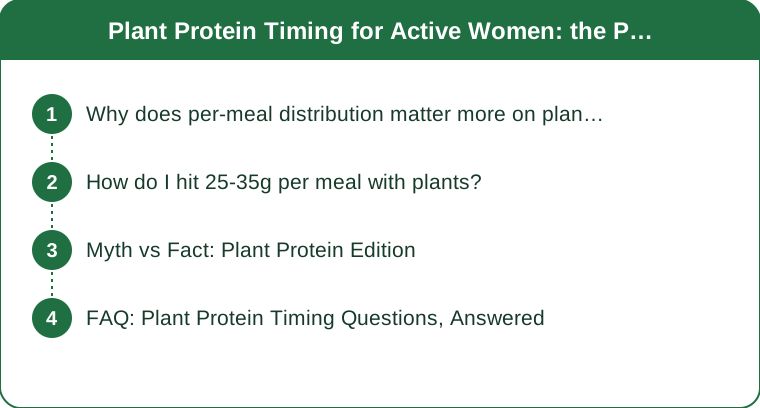
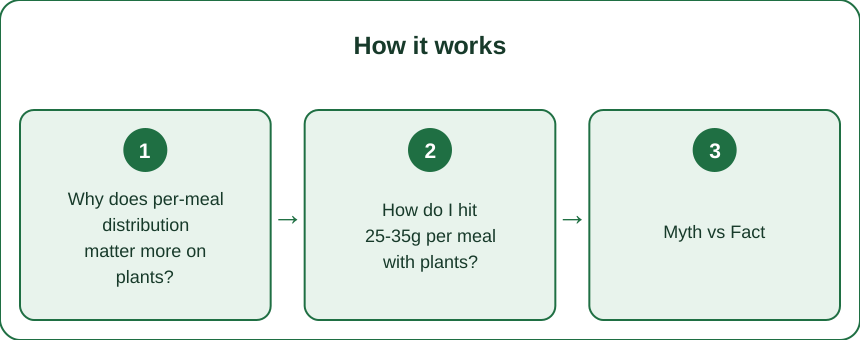
Why does per-meal distribution matter more on plants?
Muscle protein synthesis (MPS) — the building process meals switch on — behaves like a threshold trigger: each meal either provides enough of the amino acid leucine (roughly 2.5-3g) to flip the switch fully, or it doesn’t. Under-threshold meals still nourish you; they just under-trigger the building signal.
Here’s the plant-specific part: plant proteins run lower in leucine per gram than dairy or eggs (soy is the closest, most legumes and grains sit lower). So the protein dose that flips the switch is higher on plants — research suggests plant-based eaters benefit from aiming at the upper end: ~30-40g per meal, versus the ~20-25g that suffices with whey.
Which exposes the classic failure pattern: a plant-based day of toast breakfast (8g), salad lunch (12g), and lentil-pasta dinner (45g) hits 65g total but fully triggers MPS once. The same groceries redistributed trigger it three times. Distribution isn’t a garnish on the total — on plants, it’s half the game.
How do I hit 25-35g per meal with plants?
The anchor system — every meal gets ONE dense anchor, then the supporting cast:
Anchors (the heavy lifters):
- Firm tofu (~20g per 200g), tempeh (~19g per 100g), seitan (~25g per 100g — the density champion), edamame (~18g per cup), soy milk (~7g per cup — the sneaky upgrader over almond’s 1g), lentils (~18g per cooked cup), and soy or pea protein powder (~20-25g per scoop) for the meals that structurally struggle.
The meal math in practice:
- Breakfast (the classic weak spot): oats cooked in soy milk + 2 tbsp peanut butter + hemp seeds ≈ 22g; or a soy-milk protein smoothie ≈ 30g+; or scrambled tofu on whole grain toast ≈ 28g.
- Lunch: grain bowl with a full cup of lentils or 150g tofu + quinoa base ≈ 30g.
- Dinner: usually fine already — just stop needing it to carry the whole day.
- The fourth slot: post-workout or evening — soy yogurt + granola, edamame, or the powder route.
Supporting cast that quietly adds up: quinoa, hemp and pumpkin seeds, nutritional yeast (~8g per 2 tbsp), whole grain breads and pastas. The anchors get you to 20; the cast carries you past 25.

Myth vs Fact: Plant Protein Edition
Myth: You must combine specific proteins at every meal (the ‘complete protein’ choreography). Fact: Retired science — amino acid pools mix across the day, and a varied plant diet covers completeness without meal-by-meal pairing rituals. The per-meal issue is quantity and leucine dose, not combination ceremony.
Myth: Soy interferes with women’s hormones. Fact: The weight of human research shows normal soy consumption is safe — and soy happens to be plant-based eating’s best leucine source, which makes fearing it doubly costly. (Individual medical situations belong with your clinician. This is general information, not medical advice.)
Myth: Plant protein ‘doesn’t work’ for building muscle. Fact: Studies matching total protein and training show plant-based athletes building comparable muscle — the catch was always dose: the comparisons equalize at adequate per-meal amounts. Plants build muscle fine; underdosed plants build less, and underdosing is the default when nobody mentions distribution.
The pattern across all three: the plant-protein conversation is stuck on yesterday’s questions (completeness, soy fear, whether it works) while the operative lever — per-meal dose — goes unmentioned.
FAQ: Plant Protein Timing Questions, Answered
What total daily protein should an active plant-based woman target?
Common sports-nutrition ranges: ~1.6-2.2g per kg bodyweight for training adults, with plant-based eaters often advised toward the higher end (digestibility and leucine math). For a 65kg woman: ~105-140g daily — which, split into 30-35g meals, is exactly 3-4 anchored meals. The math converges neatly.
Is the post-workout window critical?
Less magic than advertised — the modern view: total daily intake and distribution dominate, with a protein-containing meal within a few hours of training as sensible practice. If your 3-4 anchored meals exist, the window mostly takes care of itself.
Do I need protein powder to make this work?
Need, no; benefit, often — breakfast and post-workout are the slots where whole-food plant density gets logistically hard, and a soy/pea scoop solves them in 30 seconds. Think of powder as scaffolding for the two weak slots, not the foundation.
TL;DR:
- MPS is a per-meal threshold, and plants’ lower leucine raises the bar: target 25-35g (upper end ideal) per meal, 3-4x daily
- The 10/15/40 backloaded day triggers building once; 30/30/30 triggers it three times on the same groceries
- Anchor every meal: tofu, tempeh, seitan, lentils, edamame, soy milk — powder as scaffolding for breakfast and post-workout
- Soy fear and combining rituals are yesterday’s debates; dose distribution is the live lever
The total was never wrong — it was just showing up to one meeting a day when three were scheduled. This is general information, not medical advice.
Keep Reading
This article is for general informational purposes only and is not medical advice. Always consult a qualified health professional for guidance specific to you.