Does Protein Timing Actually Matter More on a Plant-Based Diet? Here's the Real Answer
Quick Answer: You don’t need to combine complementary proteins (like beans and rice) in the same meal — total daily intake of varied plant proteins matters more than precise meal-by-meal combining, a rule that’s been largely revised from older nutrition advice.
Older plant-based nutrition guidance insisted on pairing specific proteins at every single meal. That specific rule has actually been walked back — here’s the more accurate current understanding.

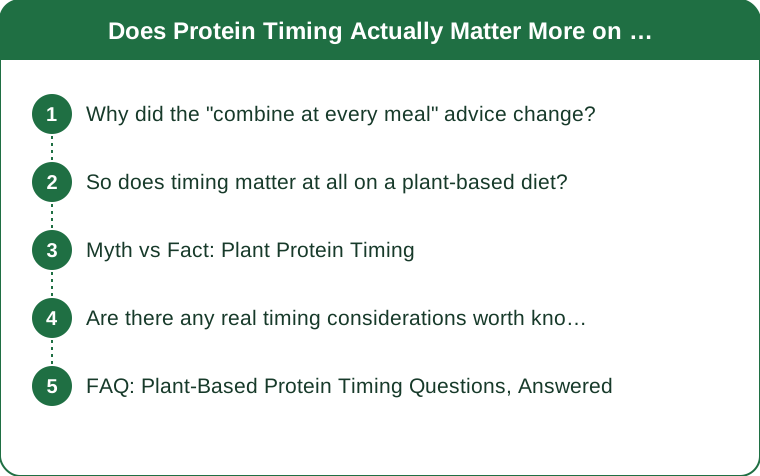
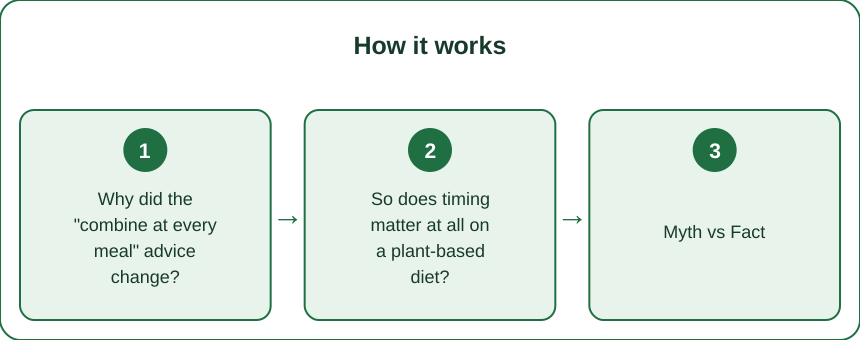
Why did the “combine at every meal” advice change?
The original concern was that most plant proteins are individually missing or low in one or more essential amino acids (making them “incomplete” relative to animal proteins, which contain all essential aminos), so early advice recommended pairing complementary sources at each meal to form a “complete” protein.
More recent research shows the body maintains an amino acid pool over roughly 24 hours, drawing from whatever you’ve eaten across the day rather than requiring every single meal to be independently complete. This means eating beans at lunch and rice at dinner still combines effectively at the body’s amino acid pool level, without needing to be in the same dish.
So does timing matter at all on a plant-based diet?
Total daily protein intake and variety matter far more than precise meal timing. Spreading protein intake across the day (rather than one large protein-heavy meal) does support muscle protein synthesis somewhat better, but this is true for any diet, not a plant-based-specific rule — it’s a general protein distribution principle.
The practical takeaway: eat a reasonably varied mix of plant proteins (legumes, grains, nuts, soy) across your day, without stressing over which specific foods land in which specific meal.

Myth vs Fact: Plant Protein Timing
Myth: You must combine beans and rice in the same meal to get a complete protein. Fact: The body’s 24-hour amino acid pool means daily variety works just as well as same-meal combining for most people.
Myth: Plant proteins are inherently inferior regardless of timing or variety. Fact: A varied plant-based diet across the week typically provides all essential amino acids in adequate amounts — variety, not perfect combining, is the actual key factor.
Myth: Soy is the only “complete” plant protein worth prioritizing. Fact: Soy is complete on its own, which is genuinely useful, but it’s not required — a varied diet of incomplete sources achieves the same outcome across the day.
Are there any real timing considerations worth knowing?
For athletes or those specifically building muscle, spreading protein intake across 3-4 meals (rather than one large dose) modestly supports muscle protein synthesis better than a single big meal — again, a general principle, not plant-specific. Post-workout protein within a few hours (not immediately, as older “anabolic window” advice implied) remains a reasonable practice for those training seriously.
For general health goals without a specific athletic target, this level of timing precision matters far less than simply hitting adequate total daily protein consistently.
FAQ: Plant-Based Protein Timing Questions, Answered
Do I need to track amino acids specifically on a plant-based diet?
Most people eating a genuinely varied plant-based diet don’t need to track amino acids individually — variety across legumes, grains, nuts, and soy typically covers the range without deliberate tracking.
Is soy protein timing different from other plant proteins?
No — soy’s completeness is about its amino acid profile, not timing; it can be eaten at any point in the day like other plant proteins.
How much total daily protein should plant-based eaters aim for?
General recommendations often run similar to omnivorous diets (roughly 0.8g/kg body weight for general health, higher for athletes), though individual needs vary — a registered dietitian can tailor this to your specific activity level and goals.
TL;DR:
- Same-meal protein combining isn’t necessary — the body pools amino acids over about 24 hours
- Daily variety across legumes, grains, nuts, and soy matters more than precise timing
- Spreading protein across 3-4 meals modestly helps muscle synthesis, but this isn’t plant-specific
- General health goals need far less timing precision than serious athletic training does
Keep Reading
This article is for general informational purposes only and is not medical advice. Always consult a qualified health professional for guidance specific to you.