You Don't Need to Combine Plant Proteins at Every Meal — Here's the Real Rule
Quick Answer: You don’t need to combine complementary plant proteins (like rice and beans) at the same meal — your body pools amino acids from meals eaten across the same day, so variety over 24 hours matters far more than pairing at every single sitting.
Someone told you years ago that rice needs beans in the same bowl or the protein ‘doesn’t count.’ That advice is decades out of date, and still shapes how a lot of people eat plant-based today.

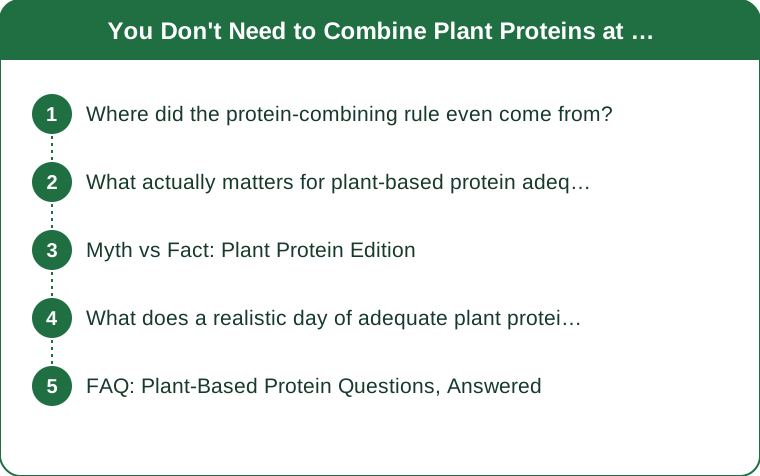
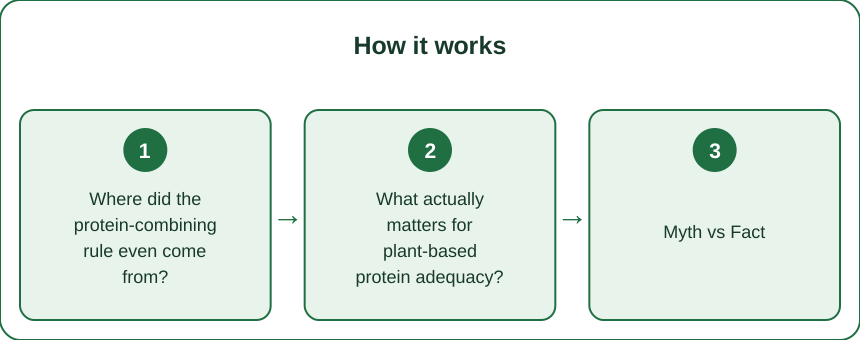
Where did the protein-combining rule even come from?
It traces to a 1971 book that theorized amino acids from incomplete proteins had to be eaten simultaneously to be used by the body. Later nutrition research overturned this — the body maintains an amino acid pool and can combine proteins eaten within the same day, not just the same meal.
The original author of that theory later publicly walked back the same-meal requirement, but the myth outlived the correction.
What actually matters for plant-based protein adequacy?
Eating a variety of protein sources across the day — legumes, grains, nuts, seeds, and soy — and hitting an adequate total daily protein intake (roughly 0.8-1g per kg bodyweight for general health, more for active people). Meal-by-meal ‘completeness’ is not the relevant variable.
Soy protein is a partial exception: it’s naturally a complete protein on its own, so tofu, tempeh, and edamame don’t need any combining at all, at any meal.

Myth vs Fact: Plant Protein Edition
Myth: You must eat rice and beans together for the protein to count. Fact: Eating rice at lunch and beans at dinner provides the same amino acid benefit as eating them together.
Myth: Plant protein is automatically ‘incomplete’ and inferior. Fact: Soy, quinoa, and buckwheat are naturally complete proteins; other plant proteins just need dietary variety, not perfection at every meal.
Myth: You need to track amino acids manually to eat plant-based safely. Fact: A varied whole-food plant-based diet meeting total protein needs almost always covers amino acid needs without any manual tracking.
What does a realistic day of adequate plant protein look like?
A day covering both total protein and amino acid variety might look like: oats with peanut butter and hemp seeds at breakfast, a lentil and grain bowl at lunch, tofu stir-fry at dinner, and a handful of nuts as a snack. No meal here is ‘complete’ in isolation and none needs to be — the day as a whole covers it.
For higher protein needs (strength training, older adults), aim for a protein source at every meal by volume, not by amino acid pairing.
FAQ: Plant-Based Protein Questions, Answered
Do I need protein powder to eat enough plant-based protein?
Not necessarily — whole foods can meet most people’s needs, though protein powder is a convenient tool for higher targets (athletes, older adults) if whole-food intake falls short.
Is soy protein really as good as animal protein?
Soy is one of the few plant proteins classified as complete with a quality score comparable to animal protein in several studies — it’s a strong staple for plant-based eating.
How much protein do active plant-based eaters actually need?
General guidance is 1.2-2g per kg bodyweight for people strength training regularly, achievable through varied whole plant foods across the day.
TL;DR:
- The rice-and-beans-at-every-meal rule is outdated; amino acids pool across the whole day
- Total daily protein and variety of sources matter more than meal-by-meal pairing
- Soy (tofu, tempeh, edamame) is naturally complete on its own
- A varied day of legumes, grains, nuts, and seeds covers amino acid needs without tracking
Focus on variety across your day and hitting your total protein target — skip the meal-by-meal math.
Keep Reading
This article is for general informational purposes only and is not medical advice. Always consult a qualified health professional for guidance specific to you.